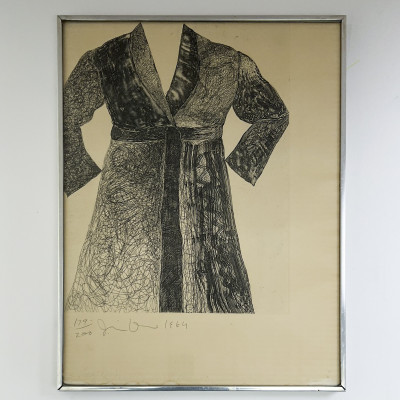
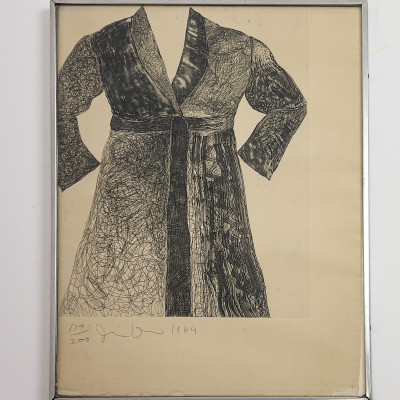
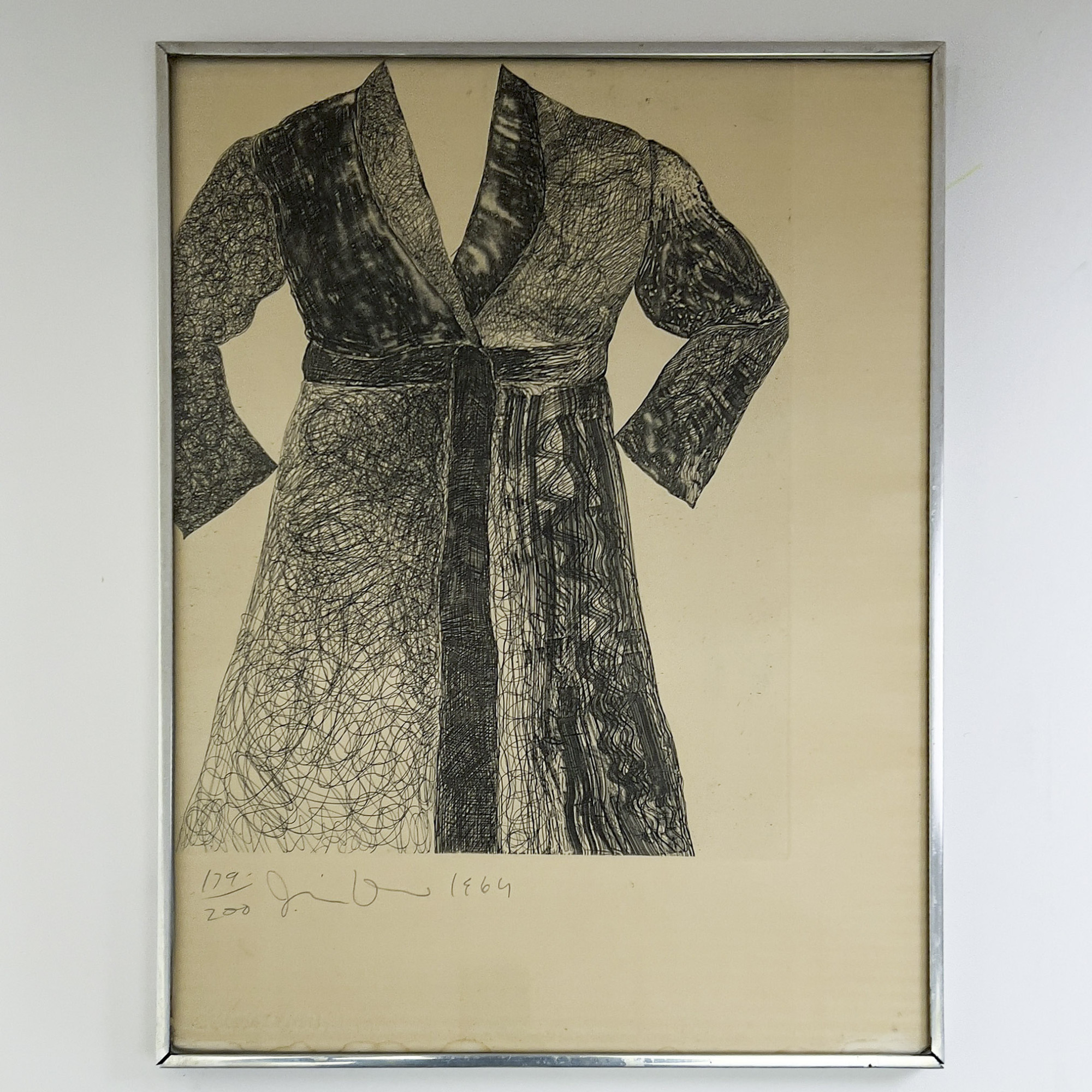
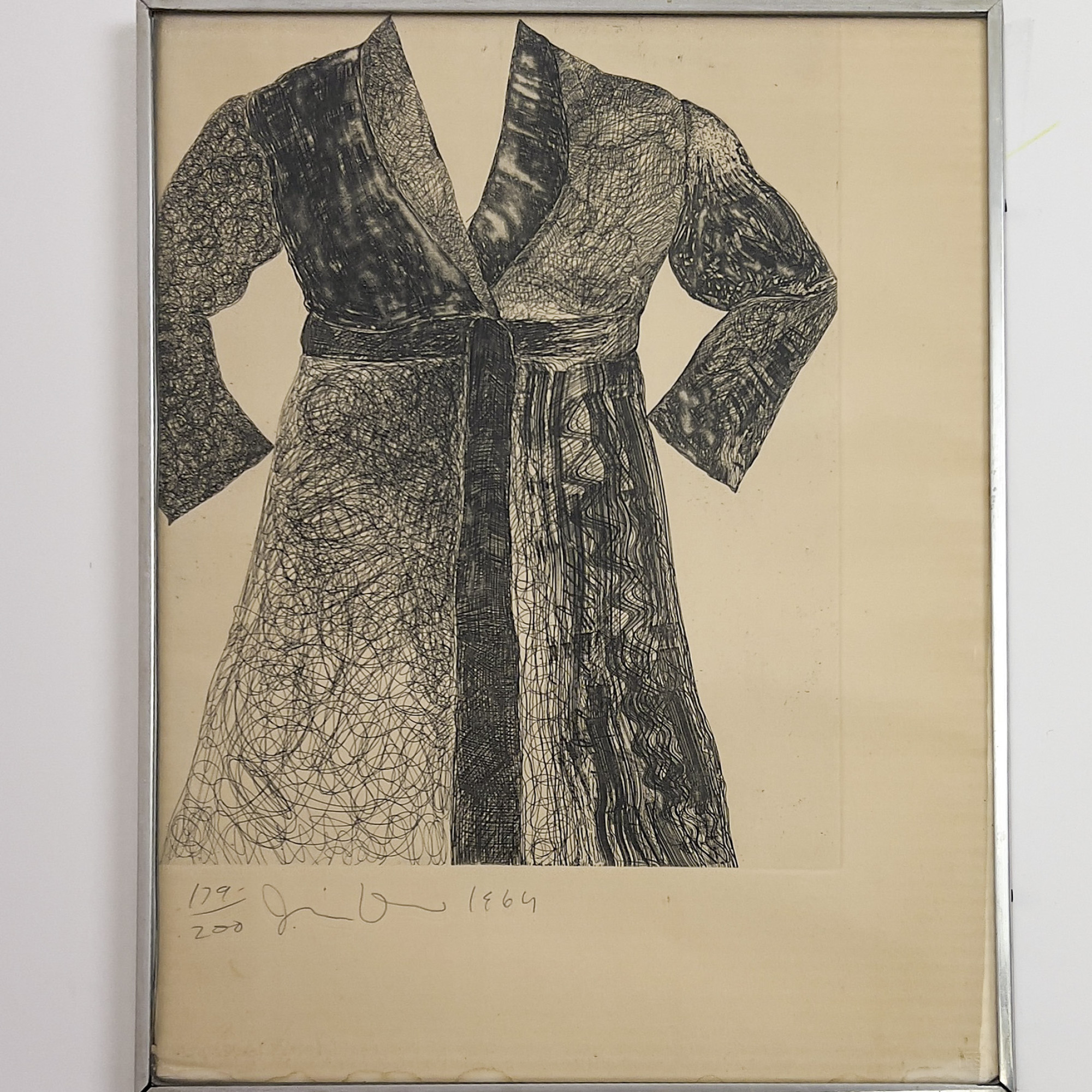
Self Portrait ( Zinc & Acid)(from New York Ten portfolio)
(1964)
Details
etching on Arches paper
sight: 21 3/4 x 16 3/4 inches
plate: 17 1/2 x 13 1/2 inches
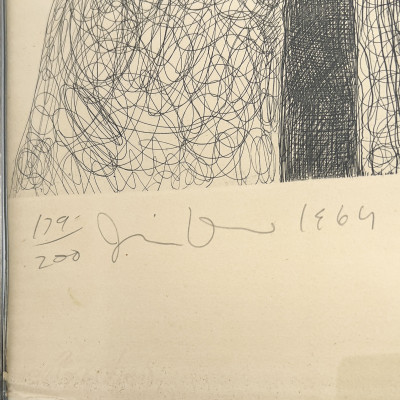
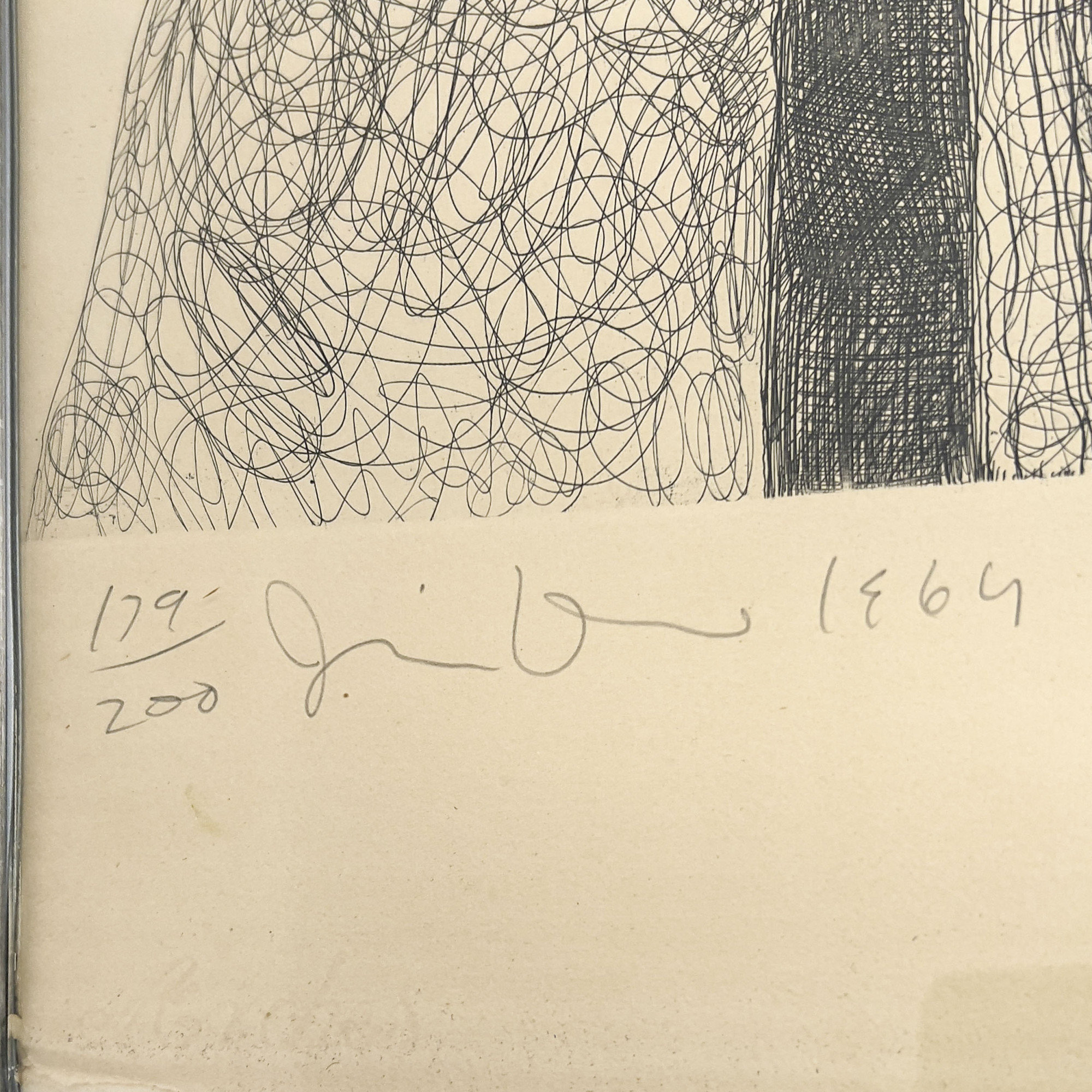
signed lower left, numbered 179/200
Additional Info
printed by Emiliano Sorini, Tanglewood Press, Inc
Condition
line of water damage along bottom edge, bottom right corner is creased, general toning to paper
If you are interested in bidding, please contact us to request more photos, or make an appointment for in-person inspection. To ensure prompt assistance, we recommend reaching out at least 24 hours before the auction by calling 212-353-2277 or emailing us at admin@capsuleauctions.com.
About condition report
Condition reports are based on visual inspection by the Capsule team under typical office lighting. Unless otherwise noted, items are not examined under UV light in advance of sale. We do not guarantee the content of written or verbal condition reports. Remember, all lots are previously owned and all sales are final. The absence of a condition report does not imply that there are no condition issues with the lot.
Art has not been examined out of the frame unless otherwise stated. Frames, lampshades, or items described as “supplementary” are not considered integral to the value of the lot and are excluded from condition assessments. This includes any mat, mounting, glazing, hanging apparatus, case, box, or stand. Timepiece movements, lighting elements and items with mechanical or electrical components have not been thoroughly tested and are not covered under warranty by Capsule.
Frame Information
aluminum frame with glazing, dimensions: 22 3/8 x 17 3/8
Jim Dine
Americanb. 1935
Jim Dine is a contemporary artist best known for his contributions to the Pop art movement, as well as his association with the Neo-Dada art movement. Dine's work spans various artistic mediums, including painting, drawing, sculpture, and printmaking. He gained fame in the 1960s as one of the pioneering artists of Pop art, which focused on everyday objects and consumer culture. One of his most famous series during this period is the "Hearts" series, which features colorful, expressive renditions of hearts, often painted with a combination of traditional and unconventional materials.
Dine's art often combines personal and autobiographical elements with iconic symbols and everyday objects. His works frequently feature items like tools, bathrobes, and everyday household objects. Dine's innovative use of materials, such as using found objects in his art, has contributed to his unique style. He also incorporates a sense of emotional and personal depth into his work, distinguishing it from the more detached, mass-culture-focused aspects of Pop art.
Image: Martin C Barry